Can You Use Parchment Paper in an Air Fryer? What's Safe and What Burns
Can you use parchment paper in an air fryer? Yes, with a few rules. Here is what is safe, what really burns, and how to use perforated liners safely at home.
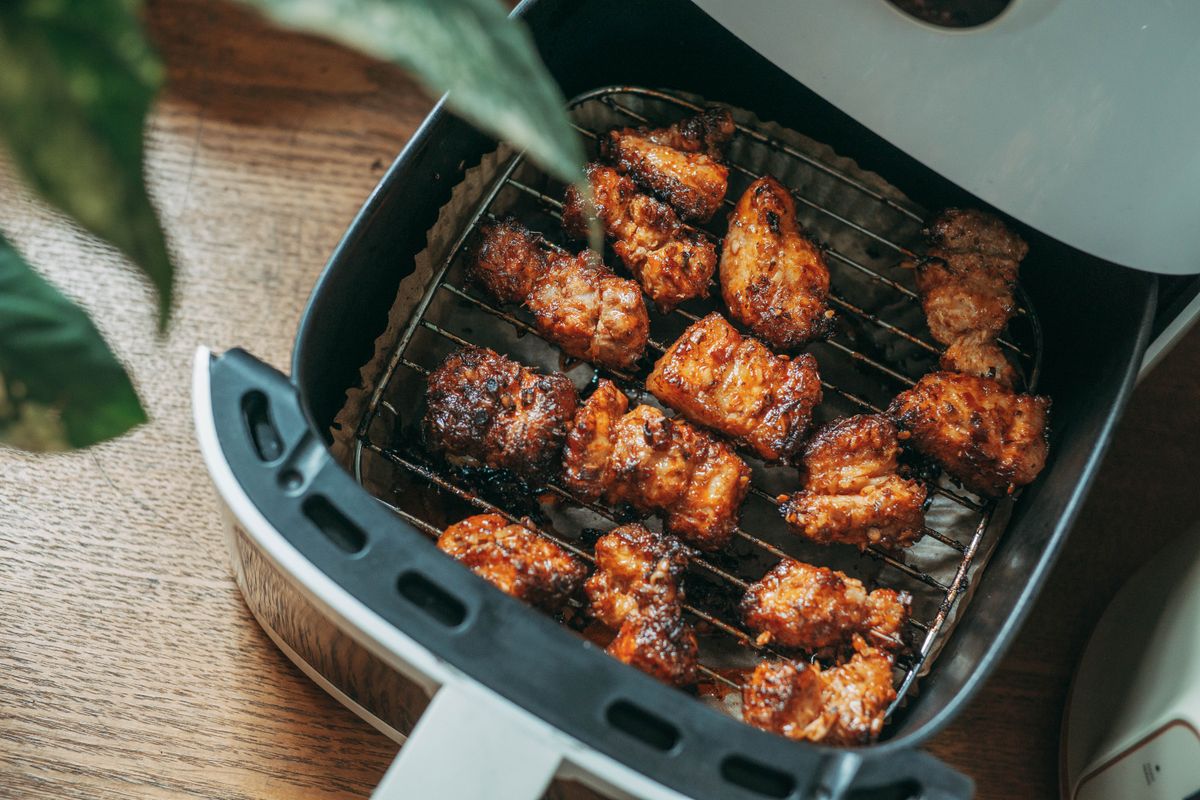
Reader-supported. EggBoo may earn a commission when you buy through links on our site. It never costs you more, and it never decides our picks.
Short version: yes, you can use parchment paper in an air fryer, and it can save you a genuinely annoying cleanup. But there is a catch, and it is the reason this question gets asked so often. Used the wrong way, a loose sheet of parchment is one of the few things that can actually start a fire inside an air fryer. Used the right way, it is cheap, handy, and completely safe.
The difference comes down to a couple of simple rules, mostly about heat and airflow. An air fryer is basically a small convection oven with a powerful fan, and that fan is what makes parchment behave differently than it does in a regular oven. So before you line that basket, here is exactly what is safe, what burns, and how to use parchment (and the perforated liners made for the job) without giving yourself a scare.
The short answer, in one table
| Situation | Safe? | Why |
|---|---|---|
| Parchment weighed down by food | Yes | Food holds the paper in place, away from the heating element |
| Perforated liner cut to fit the basket | Yes | Air still circulates through the holes for even cooking |
| Parchment in an empty basket during preheat | No | The fan can lift the loose sheet into the hot element |
| A sheet larger than the basket, riding up the walls | No | Edges can touch the element or block the vents |
| Parchment above its temperature rating | Risky | It darkens and turns brittle, and scorched paper can smoke |
| Solid parchment under food you want very crisp | Works, but not ideal | It blocks airflow at the bottom, so the underside crisps less |
If you remember only one line from this whole piece, make it this: never run parchment in an air fryer without food on top of it. That single habit prevents almost every parchment-related mishap.
Is parchment paper safe in an air fryer?
By temperature, yes, with room to spare. Most kitchen parchment papers are rated to roughly 420 to 450F, and most air fryers do their work at 400F or below. So in normal cooking, you are comfortably inside the paper's safe range. Push parchment well past its rating and it will not release anything toxic, but it does darken, turn brittle, and can start to scorch, which is where the burnt smell and smoke come from.
The real hazard is not the temperature at all. It is movement. That high-velocity fan can lift a light, unsecured sheet and blow it straight up against the exposed heating element, where it can char, smoke, or catch fire in seconds. This is the whole reason "can I use parchment paper" is a safety question and not just a convenience one. Skipping the weight, or dropping a sheet into an empty basket to preheat, is one of the most common rookie slip-ups, and it is on our list of air fryer mistakes beginners make for exactly this reason.
So the honest answer is: parchment is safe when it is held down and kept clear of the element, and unsafe when it is loose. Everything below is just how to stay on the safe side of that line.
What actually burns (and how to never let it)
Three things turn safe parchment into a problem. Avoid all three and you are set.
1. A loose sheet with nothing on it. No food weight means the fan wins. The paper lifts, finds the element, and scorches. The fix is non-negotiable: always place food on top before you start. 2. Preheating with the paper already in. An empty preheat is the most dangerous moment, because there is heat, a running fan, and no food to anchor anything. Add parchment only after the air fryer is hot, and put food on it immediately. 3. Oversized or solid paper that blocks the works. A sheet bigger than the basket rides up the walls toward the element and can cover the vents. Trim it to sit flat on the bottom, smaller than the basket floor, and never let it climb the sides.
None of this is fussy once it is a habit. Hot first, paper second, food on top, edges trimmed. That is the entire safety routine.
Why perforated liners are the easy-mode answer
You can absolutely cut your own circles or squares from a roll of parchment, and plenty of people do. But the purpose-made perforated air fryer liners exist for two good reasons, and both matter.
First, airflow. An air fryer crisps food by moving hot air all around it, including underneath. A solid sheet of parchment blocks that bottom airflow, so food cooks a little slower and the underside crisps less. The holes in a perforated liner let air keep moving through, so you get more even cooking and better crunch. If you want the crispiest possible results, more airflow at the food is the goal, which is the same logic behind not overcrowding the basket and choosing the right machine in the first place. Our guide to choosing an air fryer digs into how basket design and airflow shape your results.
Second, stability. The perforations and the heavier weight of a good liner help it sit steadier when the fan kicks up, so it is less prone to lifting than a flimsy hand-cut sheet. It still needs food on top, but it gives you a bit more margin.
Heavy-duty liners (the thicker ones, often around 45 gsm paper) are typically rated to about 450F and shrug off grease and moisture better than thin sheets. They are the small upgrade we would make.
Best foods for a parchment liner (and when to skip it)
Parchment is not for every meal. Match it to the job.
Reach for a liner when food is sticky, saucy, messy, or delicate:
- Marinated or sauced proteins like wings, drumsticks, and saucy tofu that would otherwise glue themselves to the basket
- Soft and cheesy items, fish fillets, and pastries that tear when you pry them loose
- Baked goods, eggs, and anything small enough to fall through a crisper plate
- Sticky sweet-glazed foods that make the worst kind of baked-on cleanup
Skip it (or go bare basket) when:
- You want maximum crispness on fries, tots, or anything where you want the bottom blasted with hot air. Even a perforated liner is a slight airflow trade-off, so for peak crunch, go without.
- The food is very wet. Too much liquid leaves the paper soggy and the food will not crisp anyway. Pat things dry instead.
- The item is light and flat with nothing to hold the paper down. A single slice of bread or a lone tortilla will not anchor a liner, so the loose-paper risk returns. Add weight or skip the liner.
- You are preheating. There is no food to hold the paper, so it simply does not belong in the basket yet.
A liner is a cleanup tool, not a crisping tool. Use it where mess is the enemy, and go bare where crunch is the prize.
The perforated liners worth buying
These are inexpensive, you go through them fast, and the main thing that matters is getting the right size for your basket and a perforated, food-grade design. Sizes and counts below come straight from each pack listing. Match the size to your basket (round liners for round baskets, square for square), and when in doubt, size down so the liner sits inside the basket floor rather than creeping up the walls. Prices shift, so check the current price as of June 2026.
| Liner | Size and count | Best for | Link |
|---|---|---|---|
| Katbite Perforated Round Liners | 7.5 in round, 120 pcs | Small 3 to 4 qt baskets | Check price on Amazon |
| Round Perforated Liners (broad fit) | 8.5 in round, 100 pcs | Most 5 to 6 qt round baskets | Check price on Amazon |
| Square Perforated Liners | 8.5 in square, 200 pcs | Square baskets, big value pack | Check price on Amazon |
| XL Square Liners | 10 x 10 in square, 100 pcs | Large and XXL baskets | Check price on Amazon |
| Multi-Size Round Set | 6 in round, 100 pcs (other sizes sold) | If you are unsure of your size | Check price on Amazon |
Katbite Perforated Round Liners (7.5 in)
- The Yolk: Thicker, heavy-duty round liners sized right for compact baskets, so they sit flat and stay put - Check price on Amazon
- Features: 7.5 inch round, 120 per pack, perforated, heavy-duty paper meant for air fryer baskets and steamers.
- Pros: The 7.5 inch size fits many smaller 3 to 4 quart baskets without crowding the walls. Thicker stock resists grease and tearing.
- Cons: Too small for large or family-size baskets. Round only, so no help for square machines.
- Skip if: You run a 6 quart or bigger basket, or a square one.
- EggBoo Verdict: A tidy match for small and compact air fryers, which are exactly the baskets where a clean liner saves the most scrubbing.
Round Perforated Liners, 8.5 in
- The Yolk: The do-everything round liner for the most common mid-size baskets - Check price on Amazon
- Features: 8.5 inch round, 100 per pack, perforated, listed as compatible with a long roster of popular air fryer brands.
- Pros: 8.5 inches fits a lot of standard 5 to 6 quart round baskets. Perforations keep airflow moving for more even cooking.
- Cons: Can be a touch large for the smallest baskets, where you may want to trim down. Round shape only.
- Skip if: Your basket is square, or under about 4 quarts.
- EggBoo Verdict: The safe default if you have a typical round basket and just want liners that fit and work.
Square Perforated Liners, 8.5 in
- The Yolk: Square liners for square baskets, in a value pack big enough to stop you rationing them - Check price on Amazon
- Features: 8.5 inch square, 200 per pack, perforated, food-grade paper.
- Pros: The square cut matches square baskets far better than a round liner, covering the corners. The 200-count pack lasts a long time.
- Cons: Wrong shape for round baskets. Like any liner, the corners should still sit inside the basket, not up the walls.
- Skip if: You have a round basket.
- EggBoo Verdict: The obvious pick for square-basket owners who want plenty on hand.
XL Square Liners, 10 x 10 in
- The Yolk: The big-basket liner for XL and dual-zone machines that the standard sizes leave short - Check price on Amazon
- Features: 10 by 10 inch square, 100 per pack, perforated, made for larger and XXL baskets.
- Pros: Actually covers the floor of big baskets, so food does not slide off the edge of an undersized liner. Perforated for airflow.
- Cons: Far too big for small baskets. You will want to trim if your basket is on the smaller side of large.
- Skip if: You have a standard or compact basket.
- EggBoo Verdict: The right call for high-capacity and dual-basket cooks. Not sure how big you actually need? Our air fryer finder helps match capacity to your household.
Multi-Size Round Set (starts at 6 in)
- The Yolk: A safe starting point when you genuinely do not know your basket's measurement - Check price on Amazon
- Features: 6 inch round, 100 per pack, perforated, with other diameters offered in the same line (listed up to 10 inch).
- Pros: Buying by a known size takes the guesswork out. The smaller rounds suit mini baskets and steamer baskets too.
- Cons: You have to measure your basket first to order the right diameter. Round only.
- Skip if: You already know you need a square liner or a specific large size.
- EggBoo Verdict: Handy for mini baskets, multi-cooker inserts, and anyone who wants to measure once and buy right.
How to use parchment in an air fryer, step by step
1. Preheat empty. No paper yet. Let the machine come up to temperature on its own. 2. Pick the right liner. Perforated, food-grade, and small enough to sit on the basket floor, never up the sides. 3. Add the paper, then the food, fast. Drop the liner in and put the food straight on top so it is anchored before the fan can move it. 4. Keep the vents and element clear. Make sure no edge is near the heating element or covering an airflow vent. 5. Toss the liner after. These are single-use. A greasy, scorched liner is not worth reusing, and it is cheap to swap.
That is the whole method. Hot, lined, loaded, clear, done.
How we picked
EggBoo does not run a test kitchen, so this is research-based, not a hands-on lab review. We compared what parchment manufacturers and air fryer makers publish about temperature ratings and safe use, cross-checked the consistent safety guidance that owners and appliance brands repeat, and looked at widely available perforated liners by the specs that actually matter: shape, size, perforation, paper weight, and pack count. We weighted real, repeatable guidance over hype, and we flag the airflow trade-off honestly rather than pretending a liner is free of any downside. Where a fact could not be pinned down, we left it out.
FAQ
Can you put parchment paper in an air fryer?
Yes. Use a food-grade, ideally perforated sheet, cut to sit on the basket floor, and always place food on top to weigh it down. The temperature inside a normal air fryer cycle is within parchment's typical 420 to 450F rating.
Will parchment paper catch fire in an air fryer?
It can, but only if it is loose. An unweighted sheet, or paper added to an empty basket during preheat, can be lifted by the fan into the heating element and scorch. With food holding it down and the edges trimmed, that risk goes away.
Should I preheat the air fryer with parchment paper in it?
No. Preheat the basket empty, then add the liner and food together. The empty preheat is the single most likely moment for loose paper to blow into the element.
Do I need perforated parchment, or is regular parchment fine?
Regular parchment works if you cut it to fit and weigh it down, but perforated liners are better. The holes let hot air keep circulating, so food cooks more evenly and crisps better, and the liner tends to sit steadier.
Does parchment paper stop food from getting crispy?
A little, yes. Any liner blocks some airflow at the bottom of the food. For sticky or messy foods that is a fair trade for easy cleanup. For maximum crunch on fries and similar, cook on the bare basket or crisper plate.
What about aluminum foil instead?
Foil can work for certain foods, but it should never block the air fryer's airflow vents, and acidic foods like tomatoes or citrus can react with it. For most sticky-food cleanup jobs, a perforated parchment liner is the simpler, safer choice.
Are air fryer parchment liners reusable?
Treat them as single-use. They are inexpensive, and a greasy or scorched liner is not worth reusing. Swap a fresh one in for each cook.
EggBoo Verdict: Parchment paper in an air fryer is safe and genuinely useful, as long as you respect the fan. Preheat empty, use a perforated food-grade liner trimmed to fit, and always weigh it down with food. Save it for sticky, saucy, or delicate items where cleanup is the headache, and go bare basket when peak crispness is the goal. Do that, and you get the easy cleanup with none of the smoke.